JPMorganChase
Digital Tickets
Role
Lead Product Designer
Service Designer
Timeline
MVP - 8 months
R2 - 6 months

About
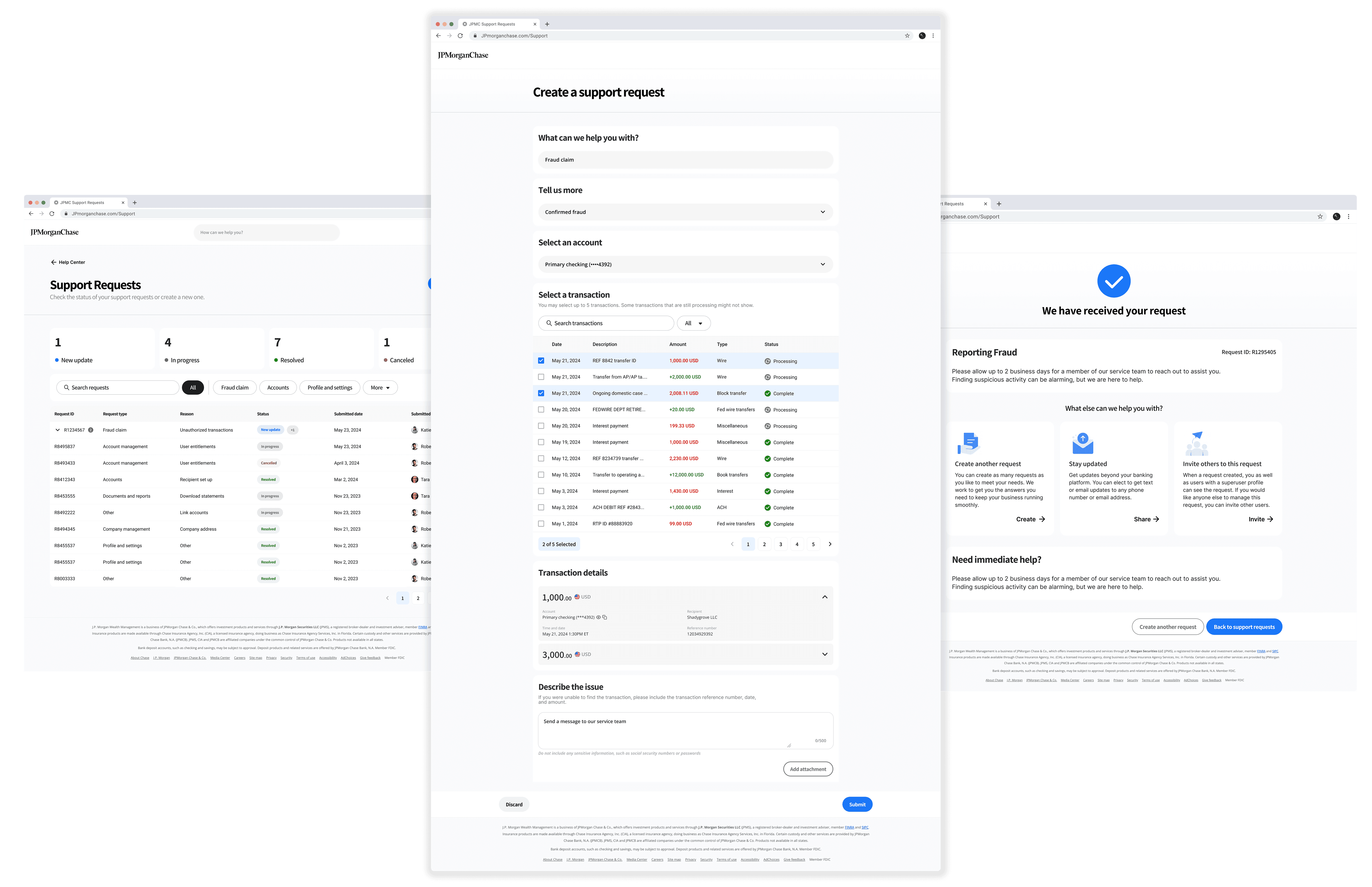
Digital tickets reimagines the way clients and customer support agents interact at JPMorganChase. The result? A seamless, responsive experience that reduces inefficiencies, personalizes support, and prepares businesses for growth - from local startups to global enterprises.
Problem and challenge
The problem
With no structured digital ticketing system, clients across all platforms are left navigating lengthy email threads and multiple phone calls, leading to delayed resolutions and operational inefficiencies.
Client pain
No define channel for support means endless emails and calls to try to get answers.
Internal agent pain
Manual case management made even simple issues time-consuming and exhausting.
The challenge
Build a responsive, platform-agnostic (Chase Connect, JP Morgan Access, and NX) ticketing solution scalable for all types of support request, while streamlining support interactions by reducing case cycle time and message volume.
The metrics
We aimed for faster resolutions, fewer back-and-forth messages, and a significant drop in phone and email chaos.
Outcome
The result
Designed and delivered a scalable ticketing system that streamlined the support experience for both clients and agents. Leveraged an LLM-powered search and taxonomy-based framework to surface relevant content, personalize support journeys, and accelerate issue resolution. Introduced robust ticket tracking and seamless two-way communication to improve transparency and efficiency.
Initial metrics
30K users

The outcome
I delivered a scalable ticketing system that simplified life for both clients and agent. The framework utilized and Level 2 (L2) taxonomy to customize journeys and provide clarity on issue resolution, along with a robust ticket tracking and 2-away communication experience.
across JPMorgan Chase’s 3 enterprise banking platforms
90% reduction

The outcome
I delivered a scalable ticketing system that simplified life for both clients and agent. The framework utilized and Level 2 (L2) taxonomy to customize journeys and provide clarity on issue resolution, along with a robust ticket tracking and 2-away communication experience.
in case creation time, from initial testing (including email creation and agent system input) 35min to 3mins.

Key screens
View requests
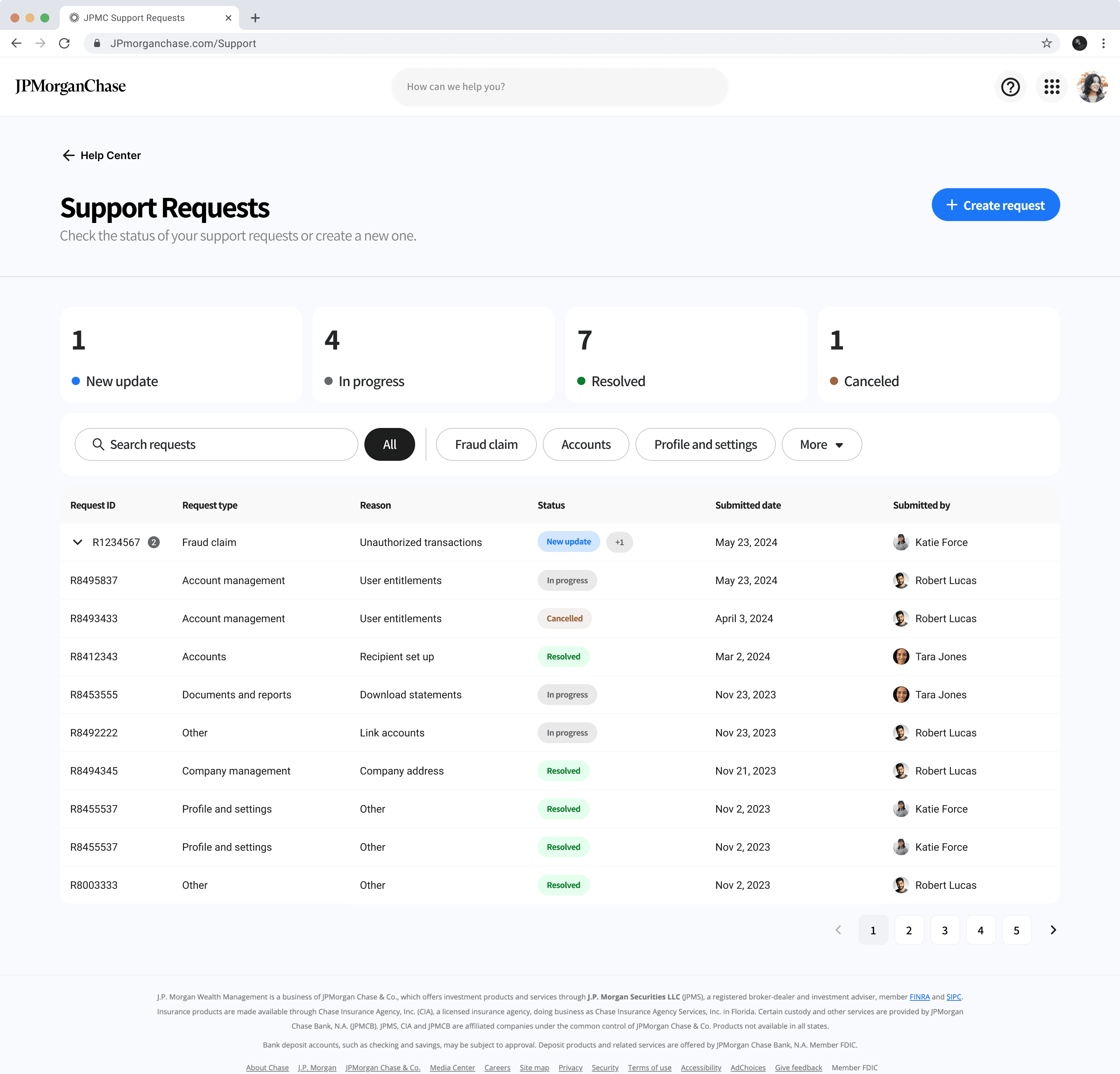
The request table organizes requests and notifies users of case updates for a quick overview of their case details.
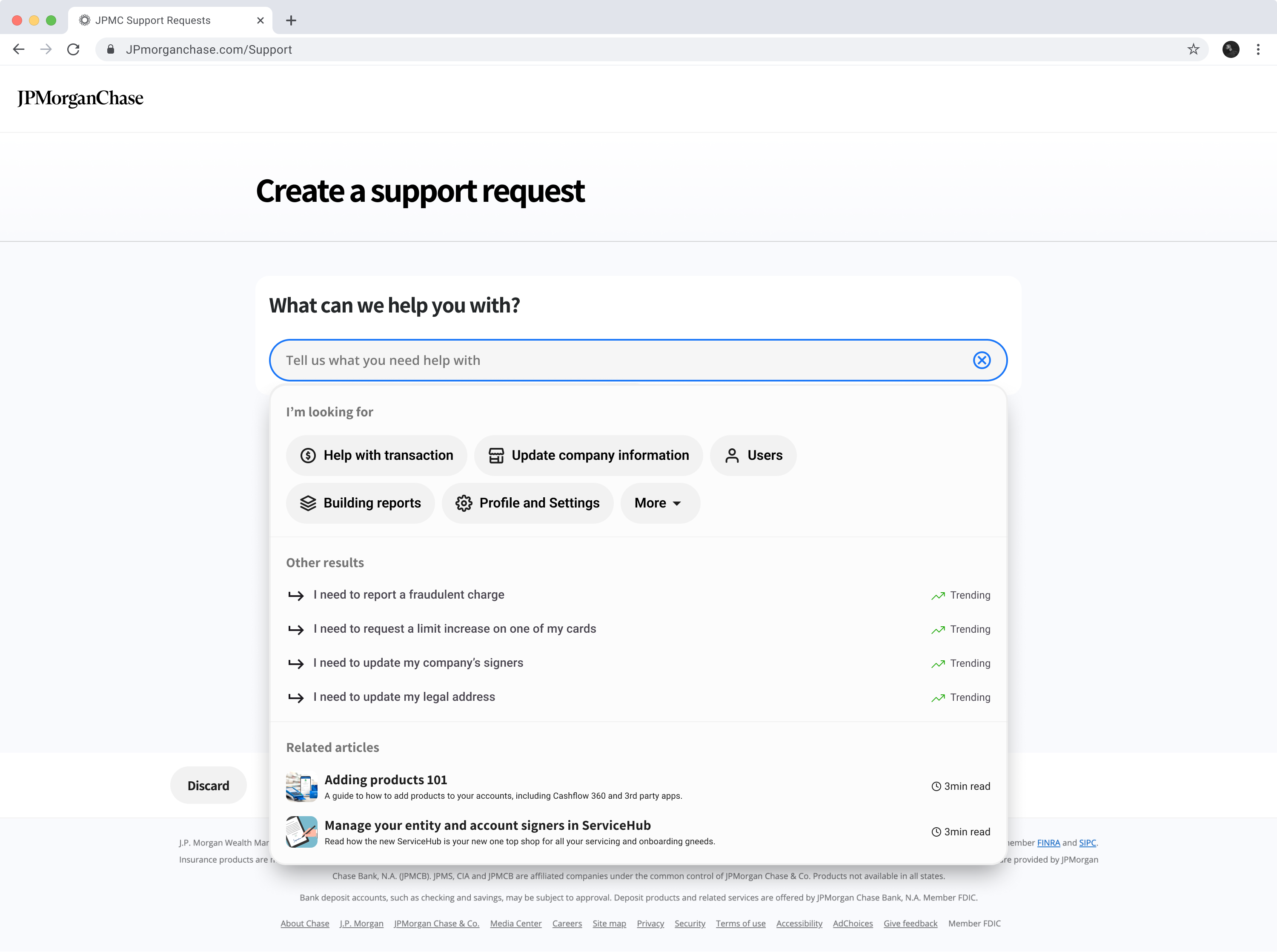
Create Request - Step 1: Search
Powered by an LLM-backed database, the first step of case creation prompts users to describe their issue, triggering an intelligent search experience that surfaces relevant request types, common issues, and DIY articles.
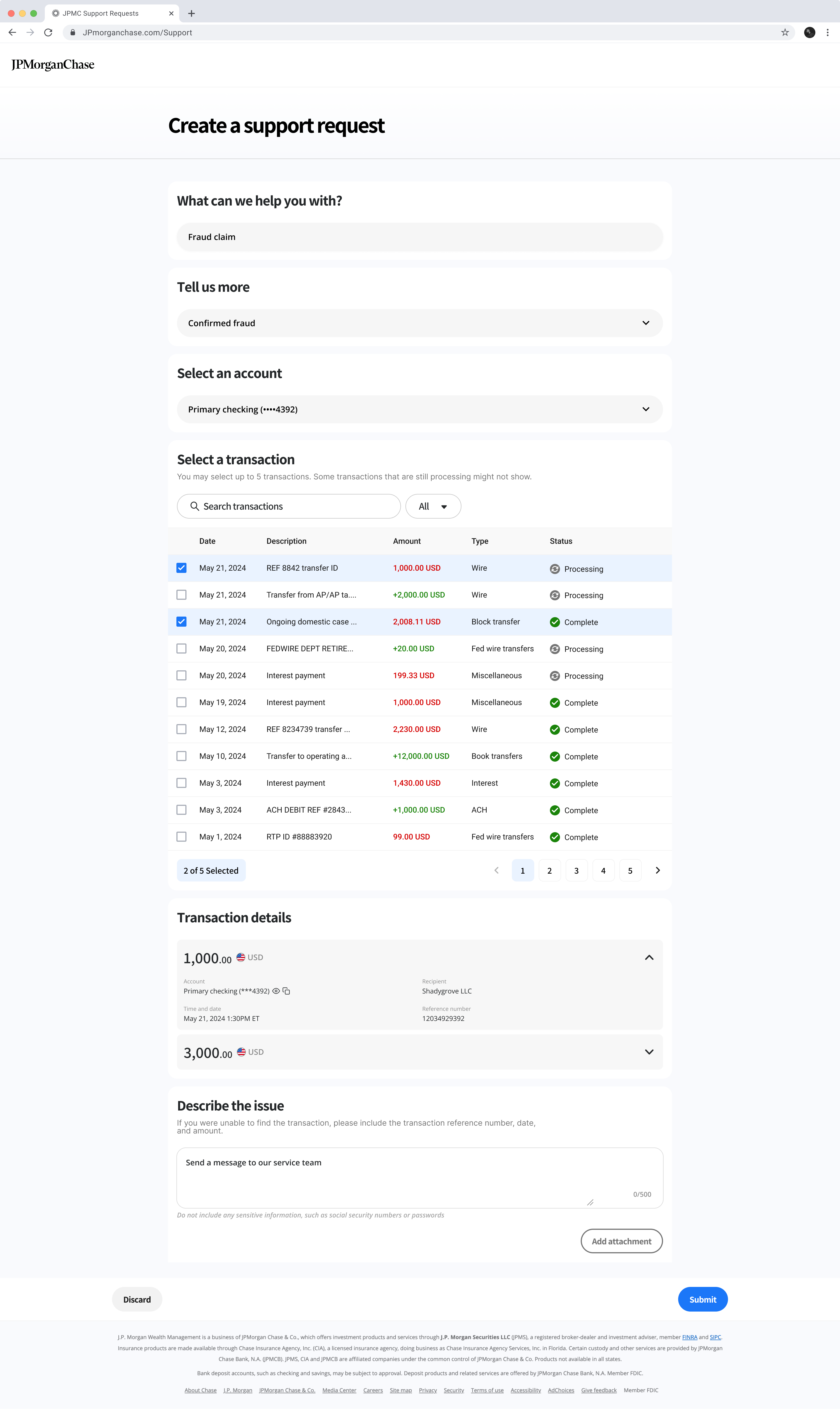
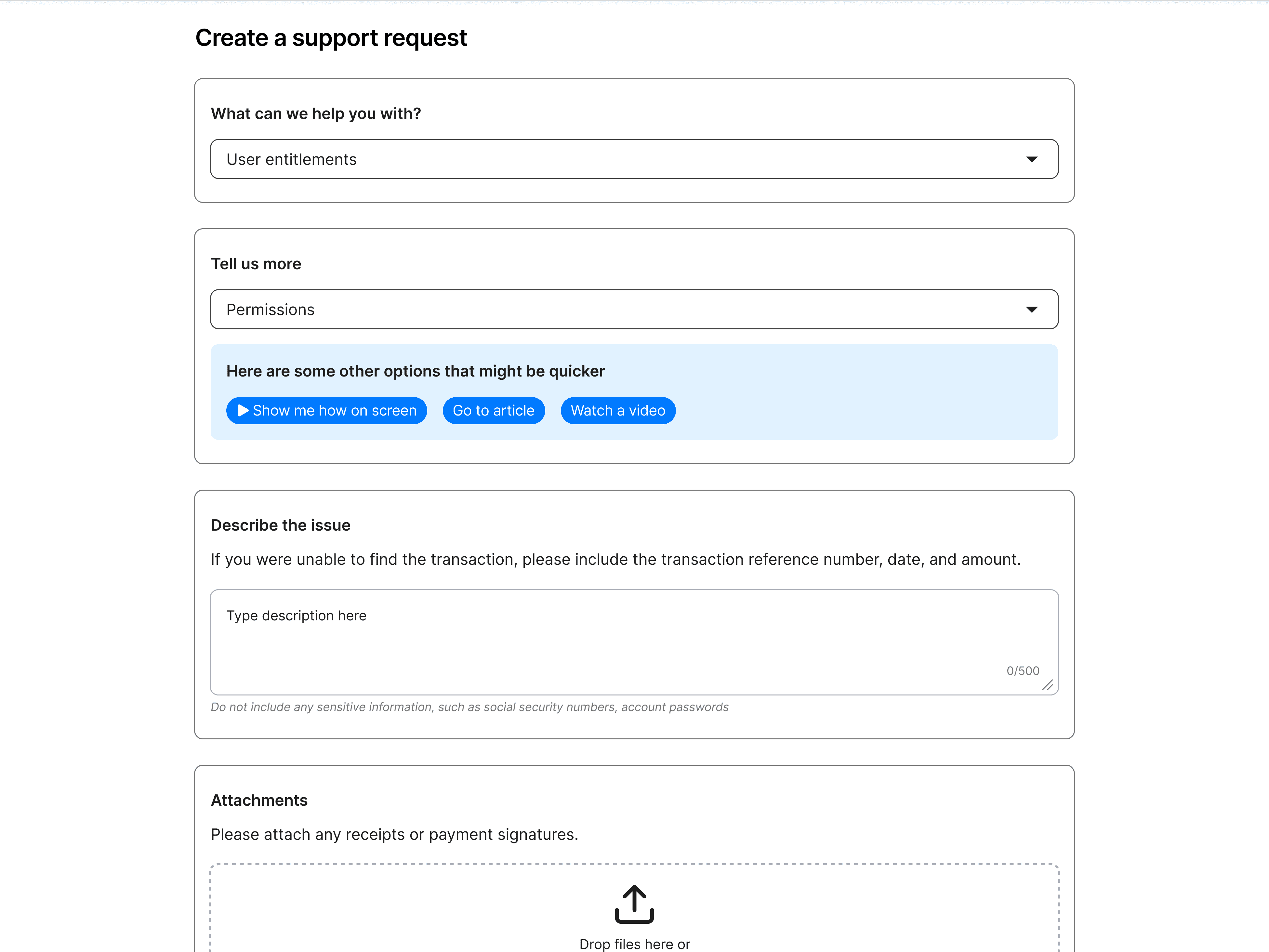
Create Request - Step 2: Form
Through progressive disclosure, users are guided by curated, stackable cards that streamline case creation and ensure accurate information input—reducing friction and cognitive load.
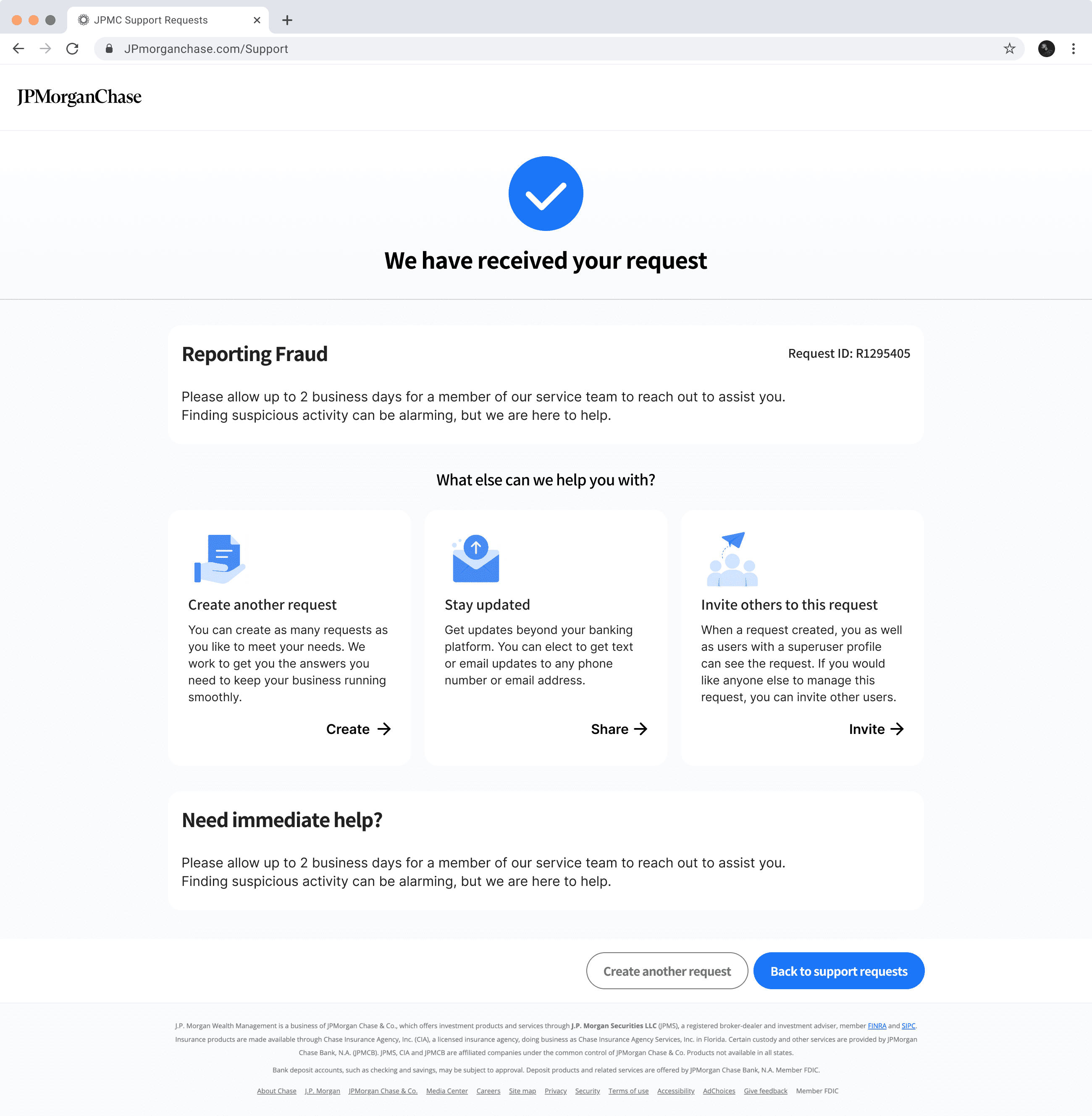
Create Request - Step 3: Success
After submitting a request, users can link their case updates to their personal phone numbers and email addresses, ensuring they stay informed through real-time notifications across preferred channels.
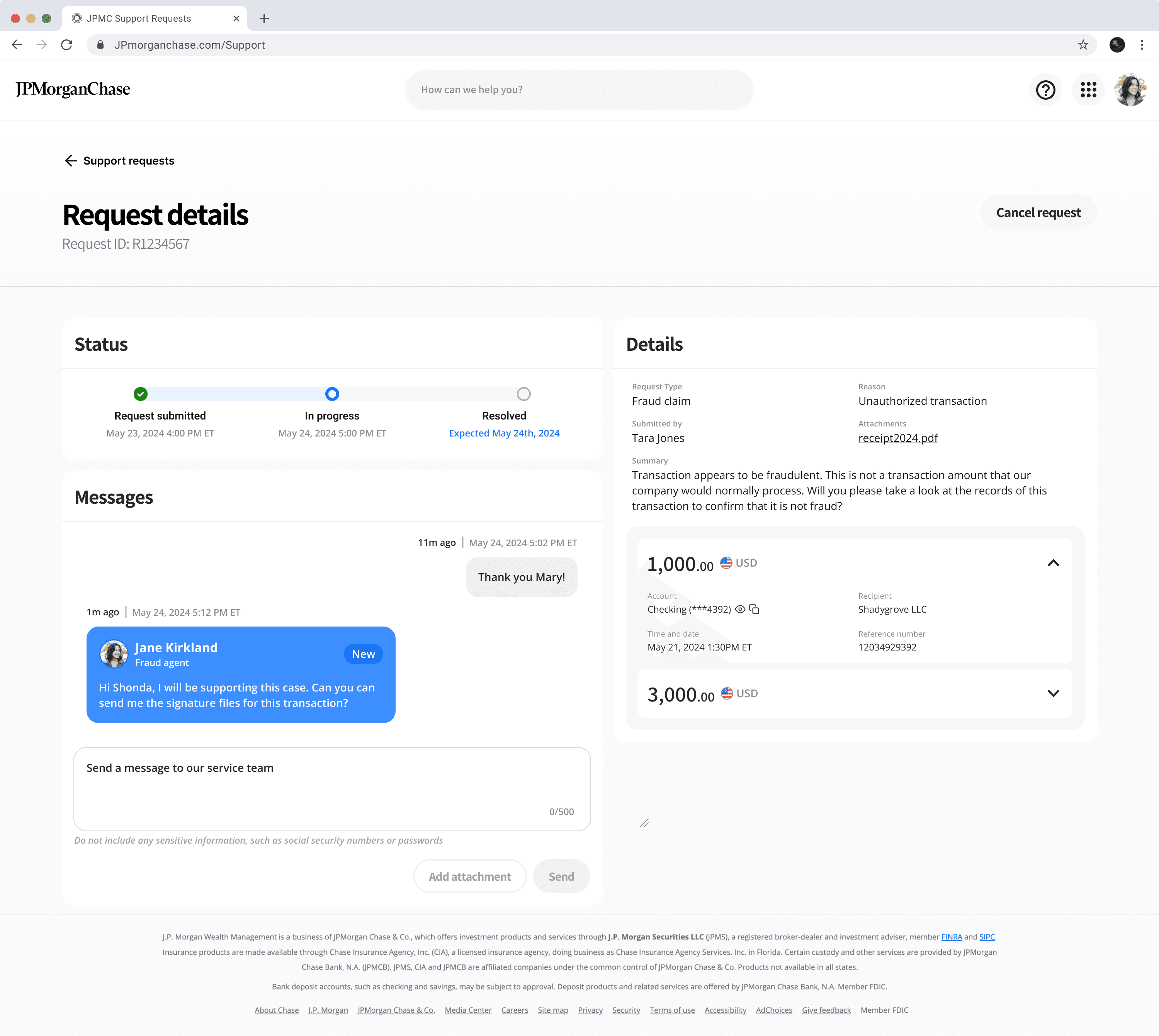
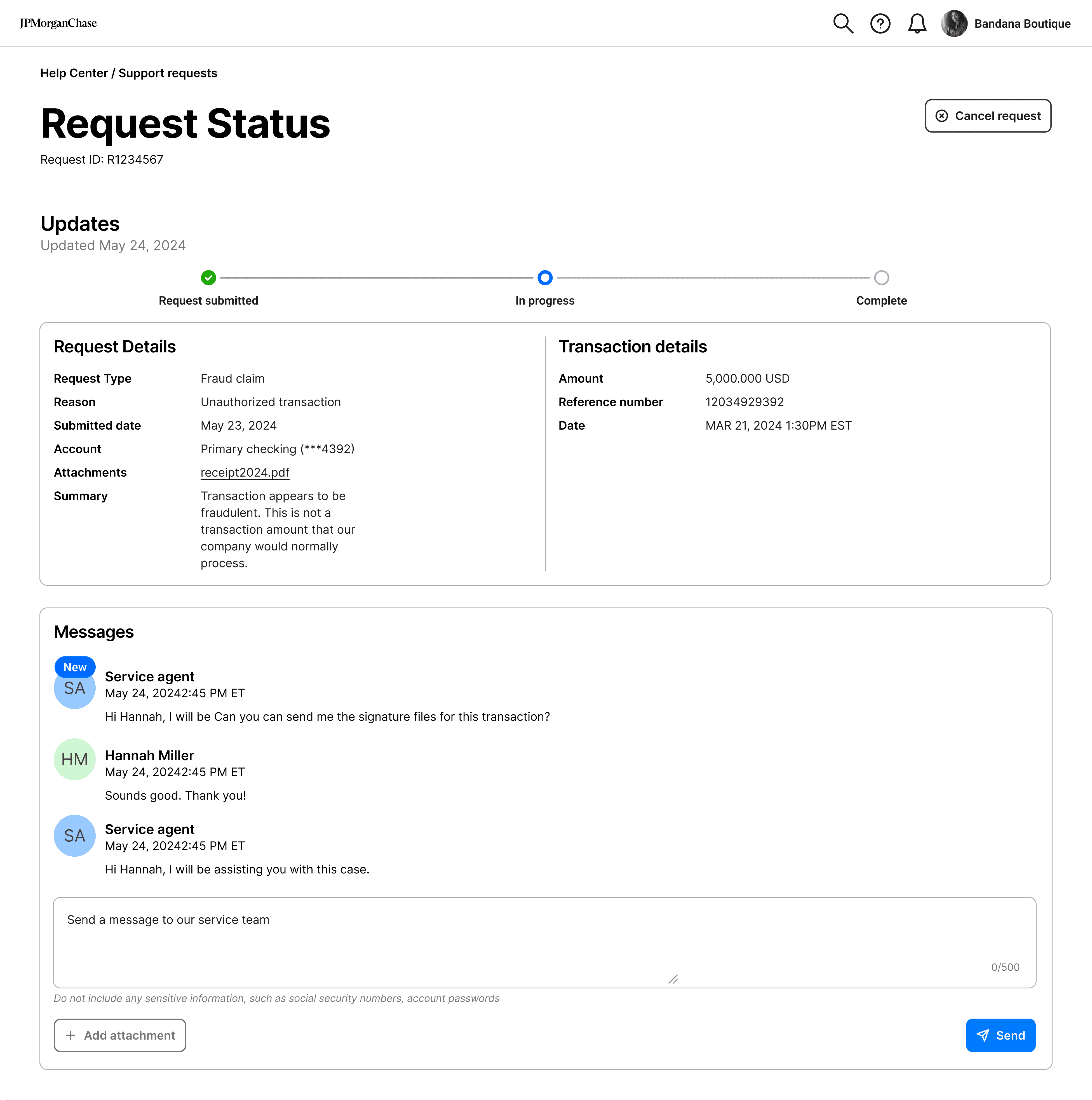
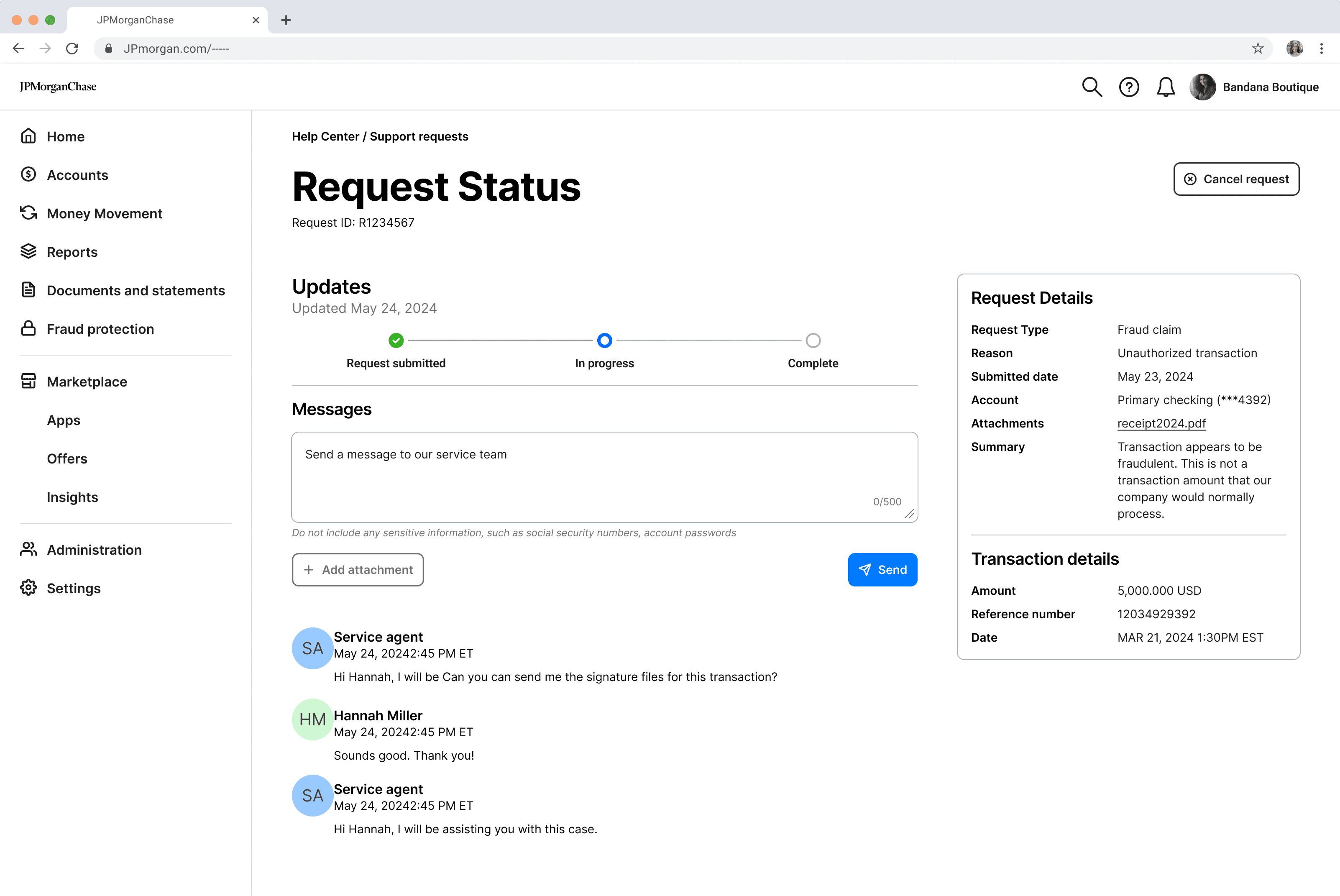
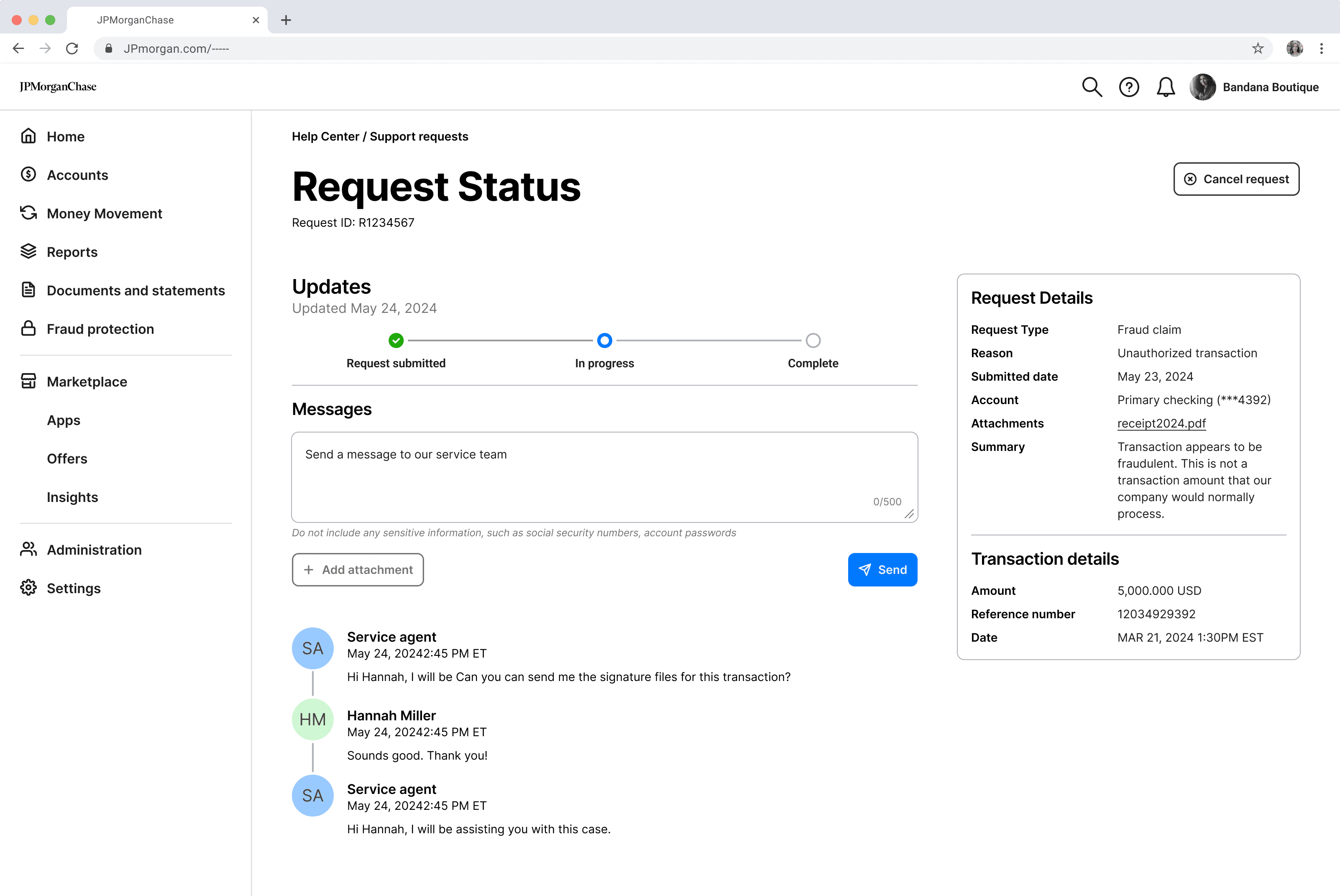
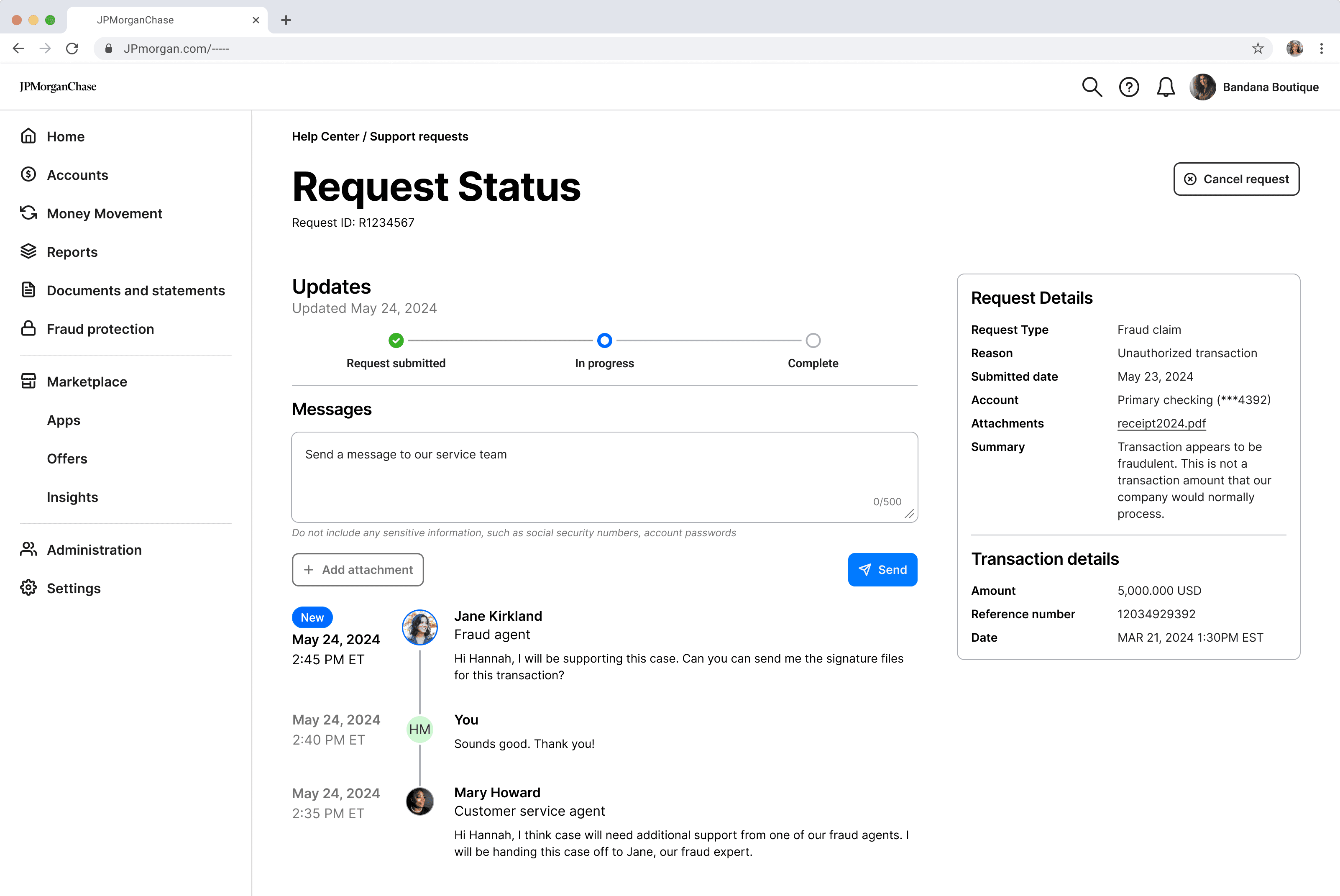
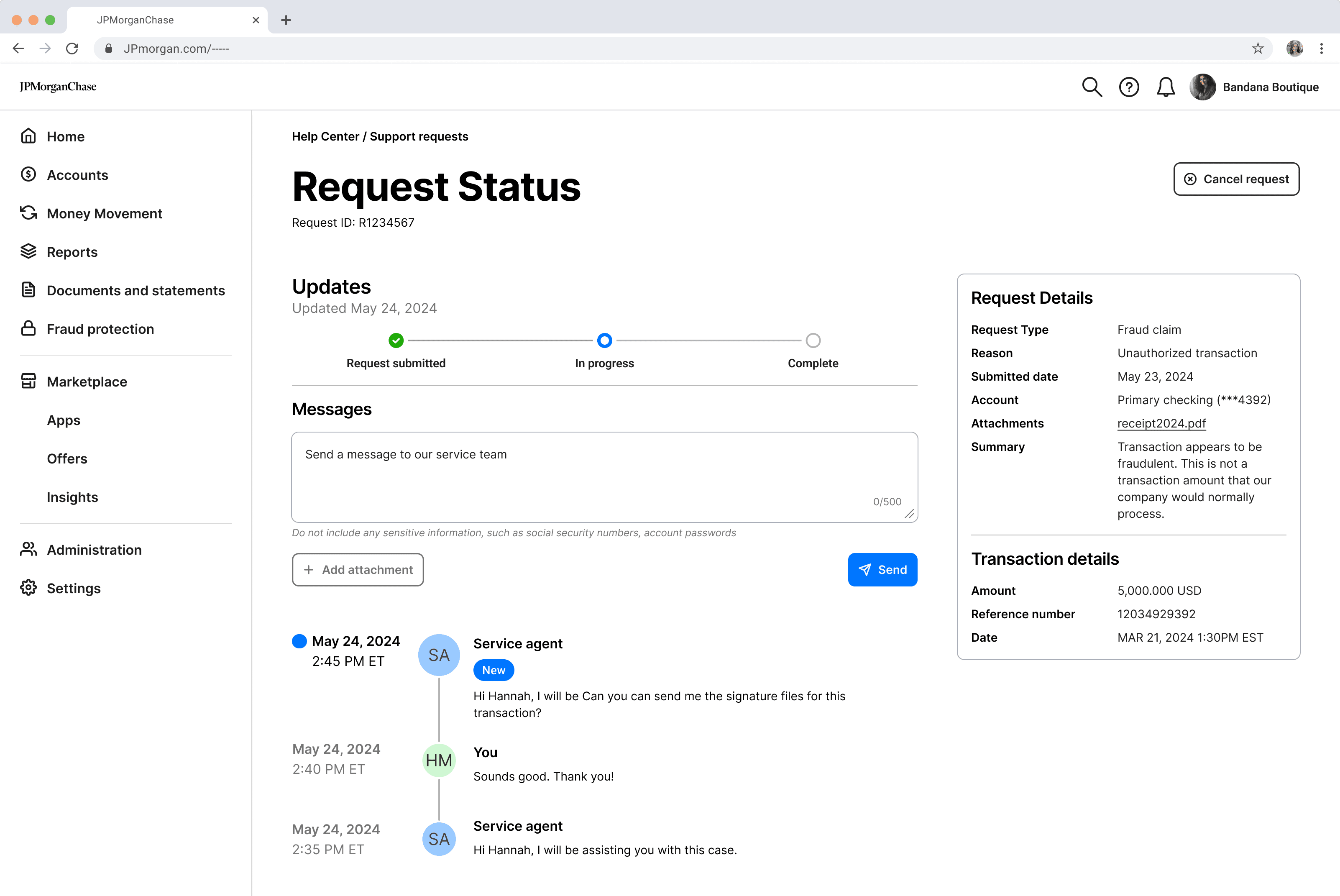
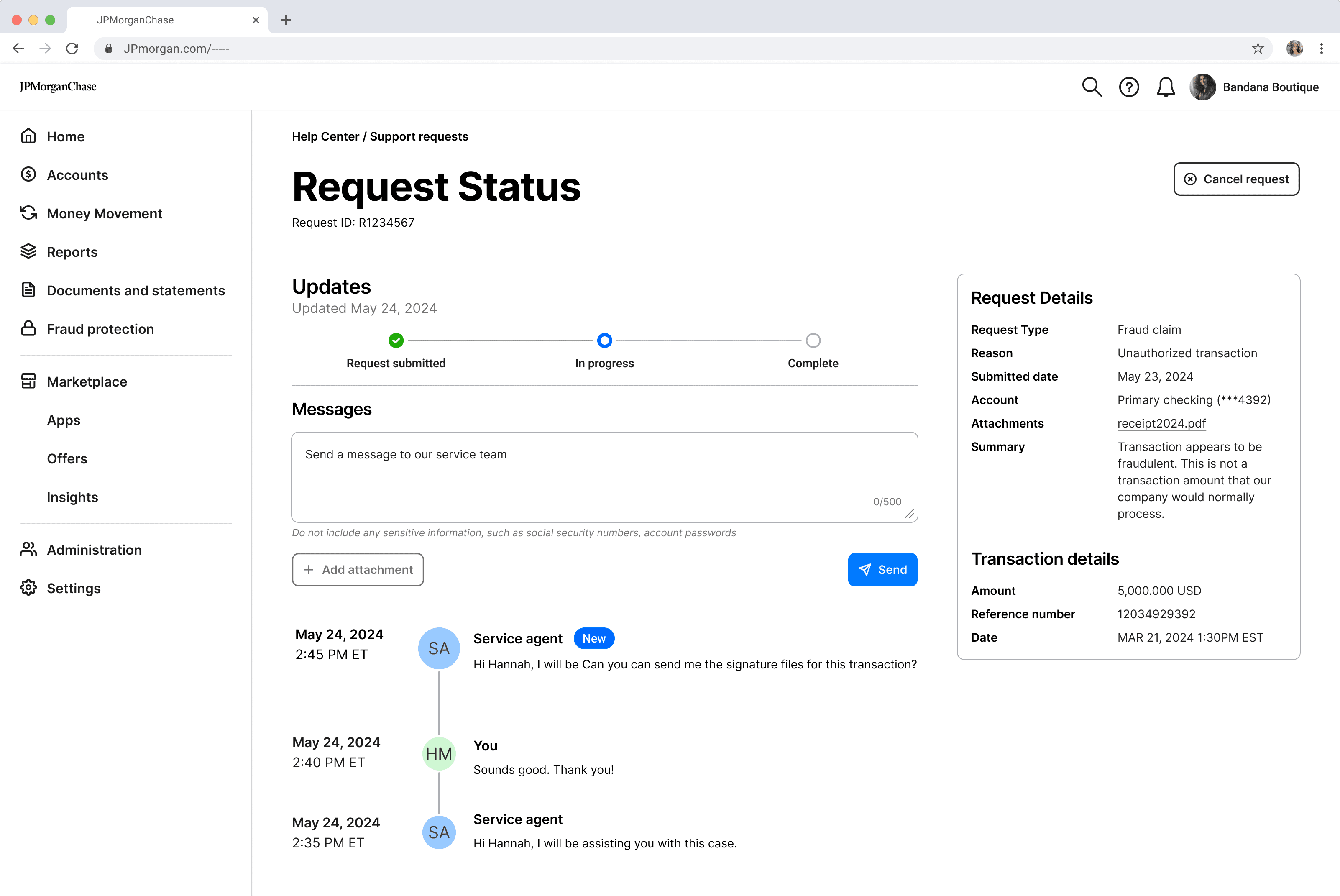
Request status
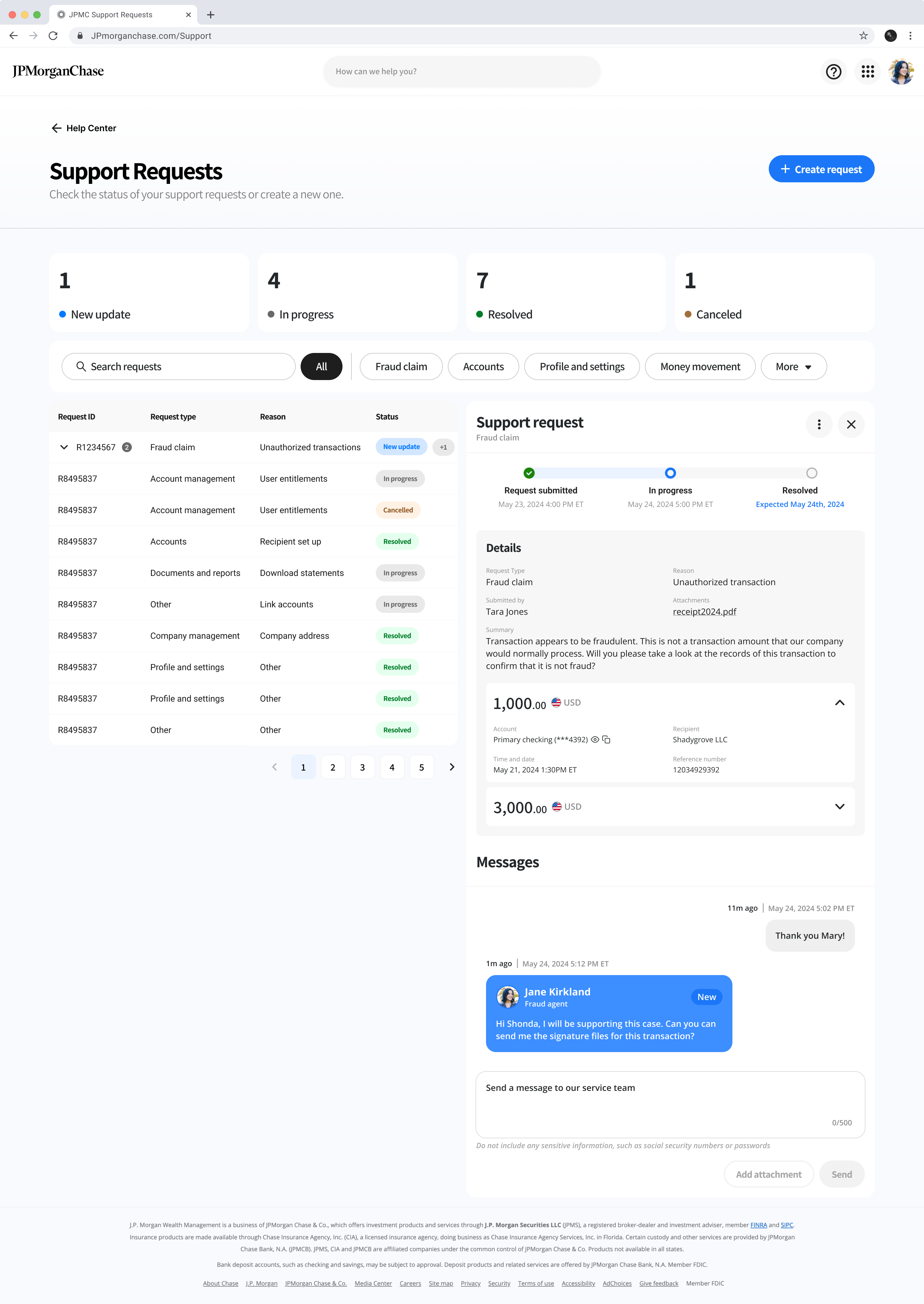
The request status page highlights key case details, emphasizing real-time tracking and easy access to agent communication to accelerate resolution.
Design journey
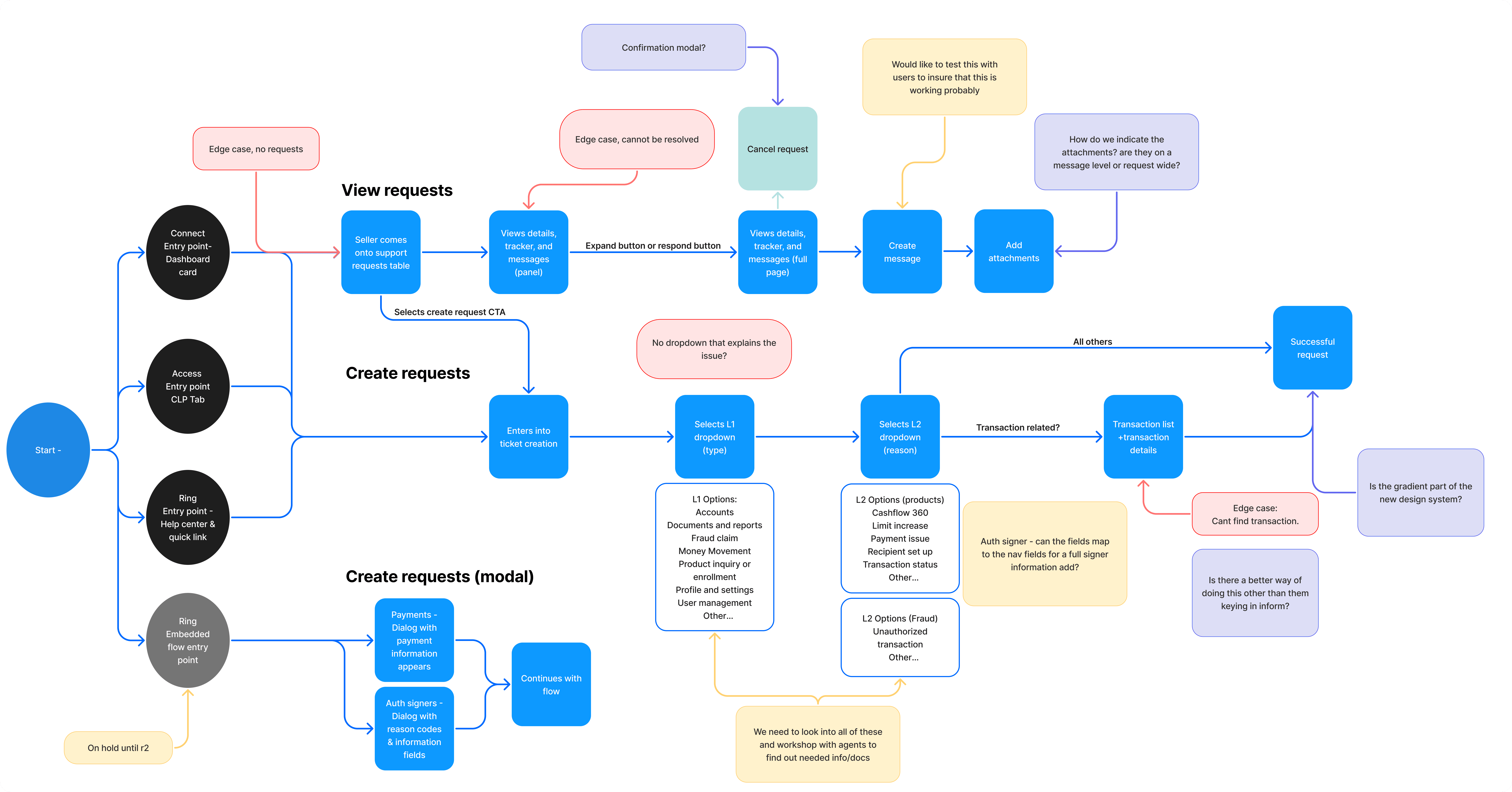
Mapping the journey
This wasn’t just UI—this was full-scale service design. By mapping standard scenarios and edge cases, I developed a framework flexible enough to handle diverse use cases.
Mapping the experience helped me:
Resolve open questions through cross-functional workshops with policy, product, and engineering.
Define platform-specific entry points to create a cohesive experience across systems.
Dissected the service experience, gaining understanding of how the tickets would pass from client to various agent teams
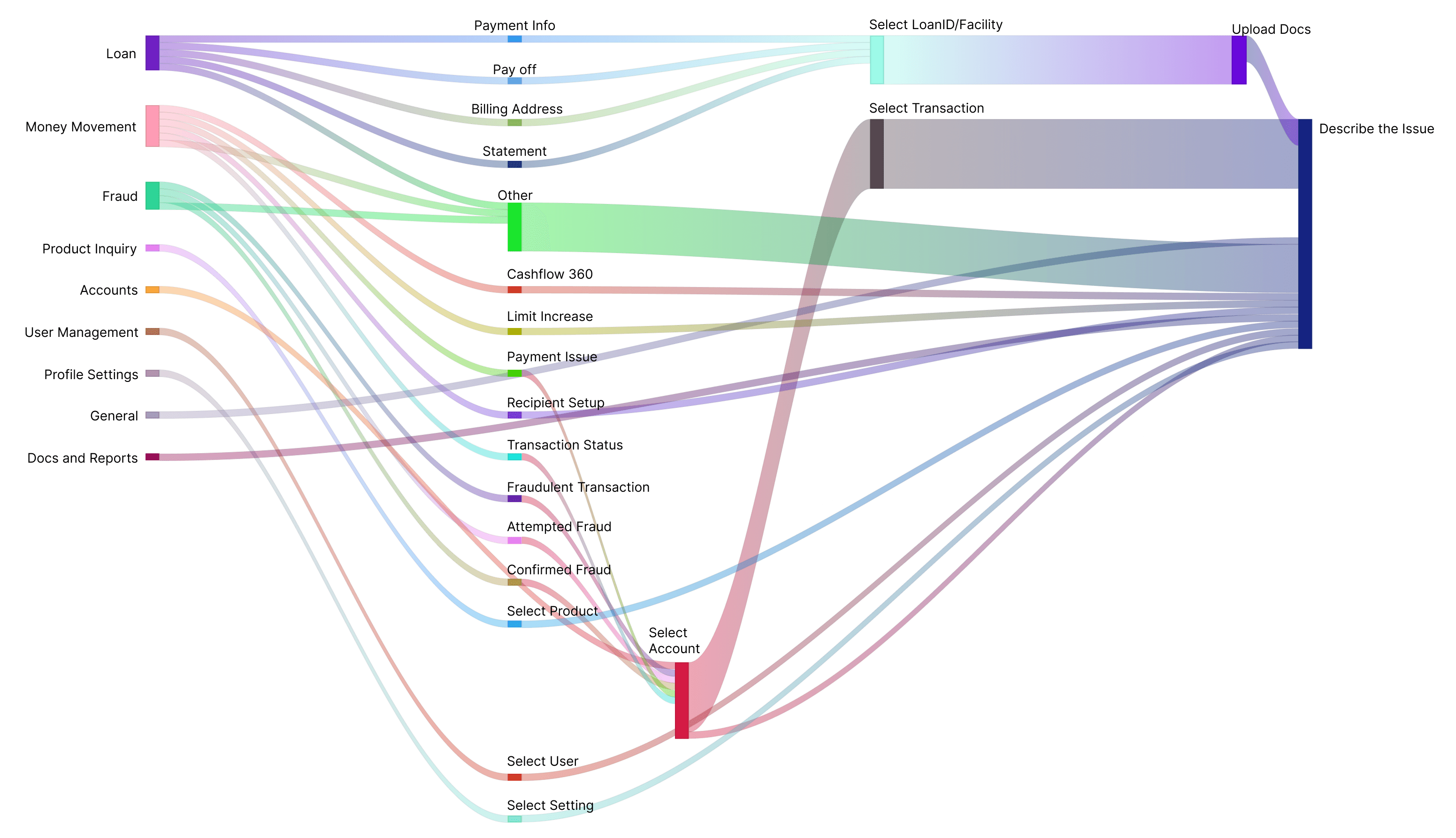
Progressive Disclosure Taxonomy
After the cases were define, the next step was how to simply show pinpointed case types and information to clients during ticket creation.
I ended up utilizing a progressive disclosure model that would would work with the case taxonomy to only display relevant inputs to users.
Target State Workshop
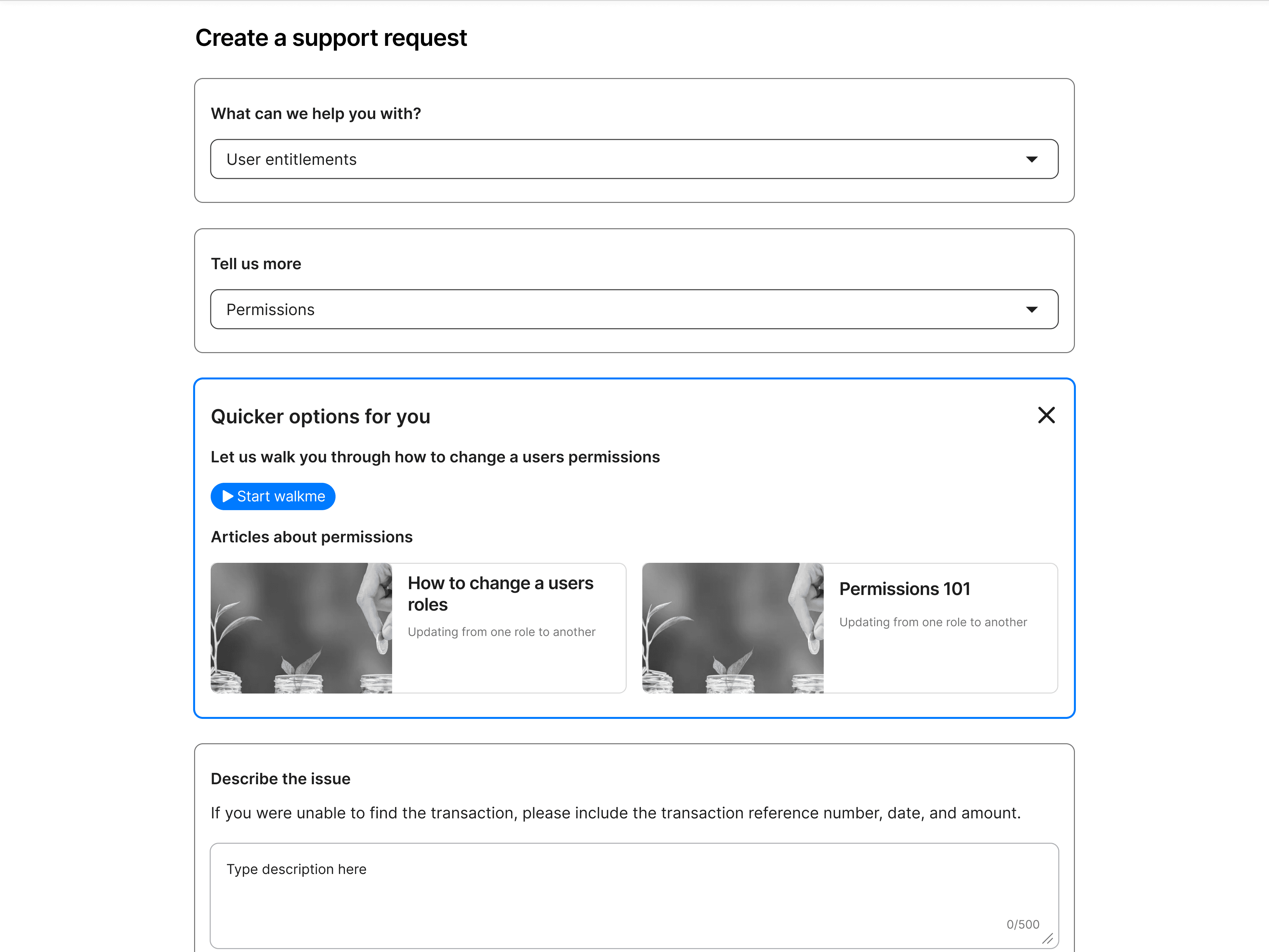
To bridge research insights and actionable solutions, I planned and led a collaborative workshop with product, service and engineering leads.
Key breakthroughs included:
Utilizing an LLM model to guide users to relevant help, rather than submit a support ticket.
Curated support channels - integrating WalkMe guides, help articles, and videos.
Flows begging for a contextual ticket to be available.
These insights turned into quick low-fidelity mockups that energized the team and set the roadmap for future iterations.
Research and validation
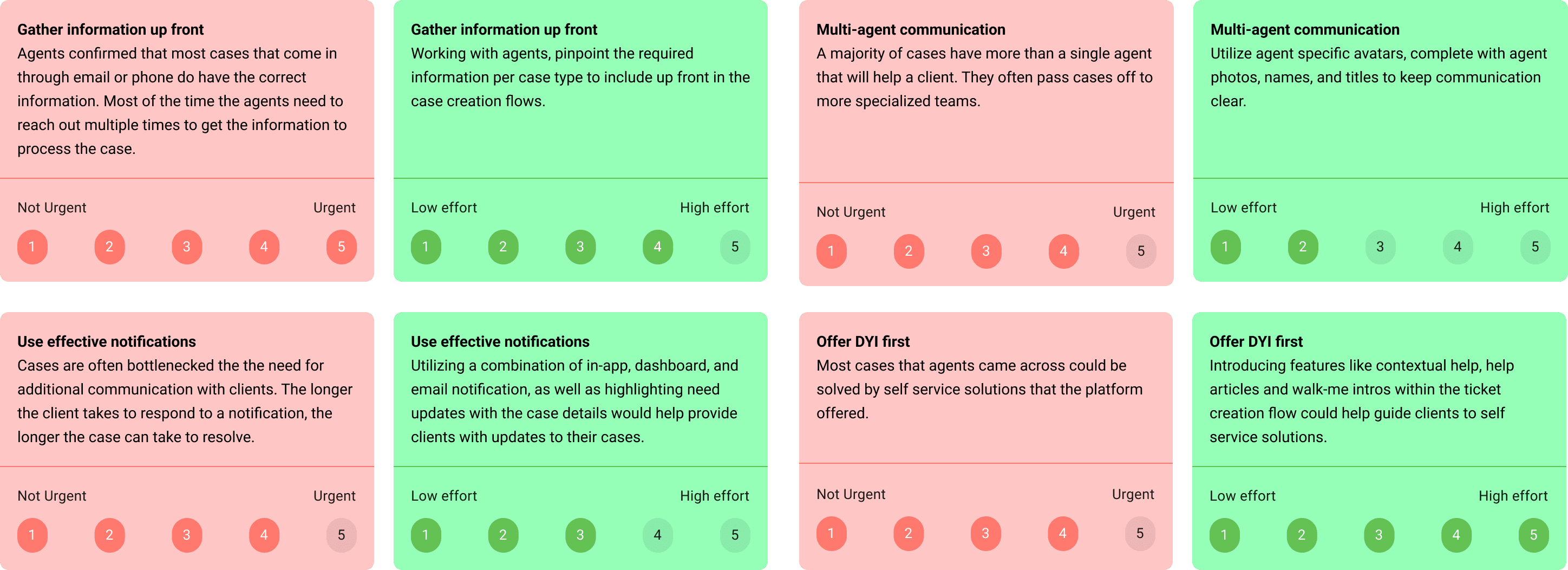
Collaborating with our research team, I took the following steps to turn insights into actionable steps:
Analyzed success factors like case volume and resolution time.
Synthesized insights into actionable themes.
Facilitated workshops to align teams and prioritize features.
We validated designs internally with agents and captured actionable insights that informed the roadmap for the team.
Design pattern ideation
Using JPMC’s design system as a base, I created two-way communication patterns tailored to real user needs.
These included:
Multi-party collaboration features - Enabling multiple agents and users to send messages in the same thread
Attachment handling - Allowing clients to attach files in the request creation as well as in a message, as well as how those attachments are shown on the backend.
Smart notifications - Alerting clients that a case has an update.
Every iteration was validated for scalability and usability, ensuring alignment across teams and systems.
Impact
Initial metrics
The first release targeted a small pool of users, as those users began submitting tickets, we were able to gather some inital metrics.
30K users
across JPMorgan Chase’s 3 enterprise banking platforms
90% reduction
in case creation time, from initial testing (including email creation and agent system input) 35min to 3mins.
Feedback loops
While the numbers are still rolling in, we’re tracking:

Case lifecycle times (North Star)
A reduction in case lifecycle times would provided the clearest indicator of success.
Email and phone call reduction
A reduction in email and phone calls indicates the support request experiences success.
Number of cases created
Cases created can be an indicator of a successful mental model shift from email/phone to the new exp.
Messaging volume per case type
Extensive messaging for a specific case type could indicate improper case creation taxonomy.
Learnings and next steps
Key Learnings
Service Design Wins: By focusing on the entire lifecycle, not just the interface, we delivered a cohesive, end-to-end experience.
Collaboration is Key: Early alignment with product, engineering, and policy teams reduced late-stage churn.
Scalable Frameworks Rule: Building with flexibility in mind future-proofed the system for growth.
Whats next
Proactive Support Channels: Expanding self-service options like dynamic WalkMe guides, embedded help videos and even utilizing ai .
Contextual Ticketing: Allowing users to submit tickets directly within their workflow, pre-populated with relevant details.
This isn’t just a tool; it’s a service revolution. For clients, for CSAs, and for the all of JPMorganChase.

Next case study
Recovery Center Square
View case study
Trent Weatherford 2024
trent.e.weatherford@gmail.com